A scientific seminar recently organized by Biolive (M) Sdn. Bhd. brought together leading experts in regenerative medicine and ophthalmology in Kota Kinabalu, Sabah, offering valuable insights into the growing role of regenerative technologies in modern healthcare.
The event gathered clinicians, researchers, and healthcare professionals to discuss the latest advancements in stem cell research, tissue engineering, and ocular regeneration.
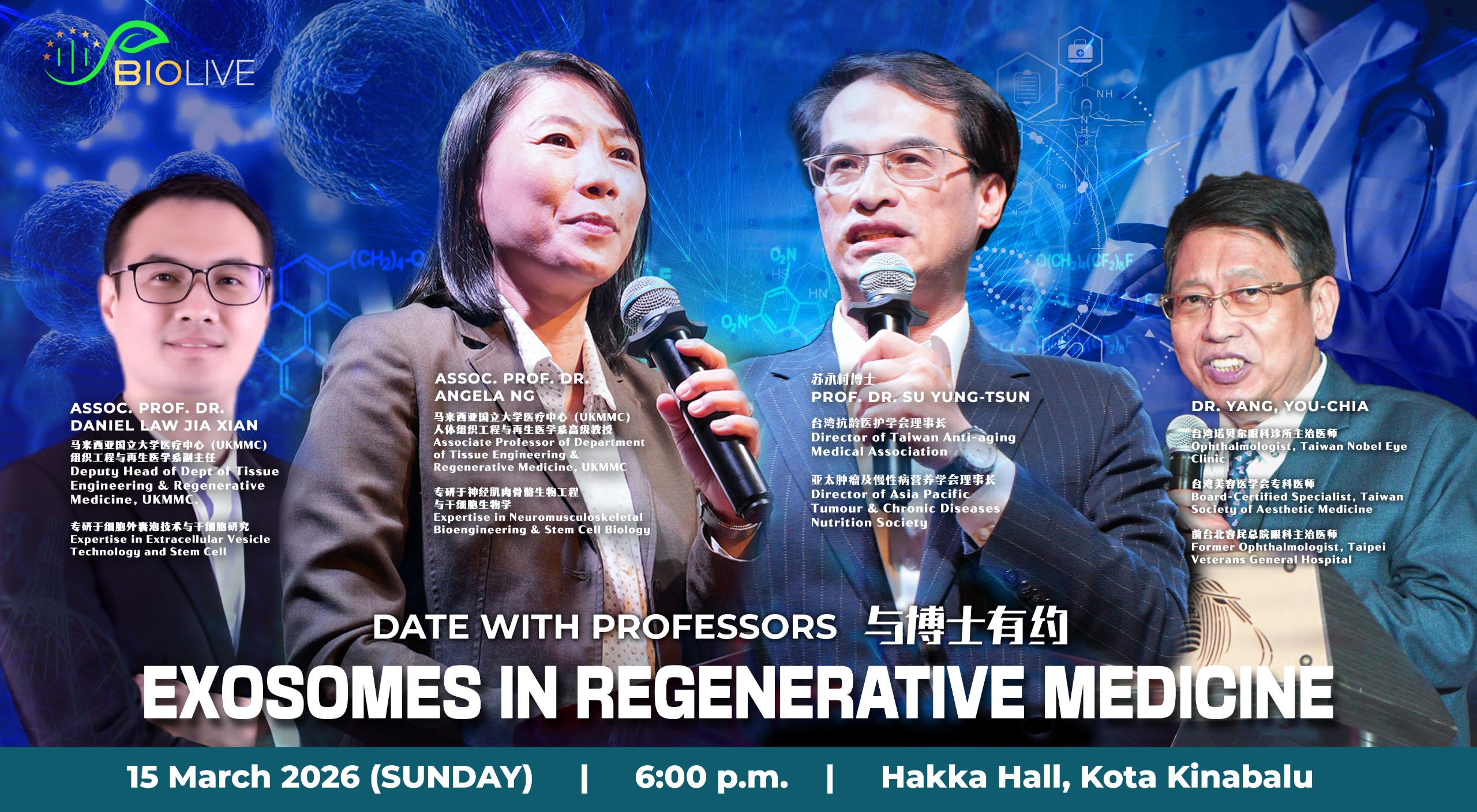
Among the distinguished speakers were Assoc. Prof. Dr. Angela Ng Min Hwei, Senior Lecturer from the Department of Tissue Engineering and Regenerative Medicine; Assoc. Prof. Dr. Daniel Law Jia Xian, Deputy Head of the Department of Tissue Engineering and Regenerative Medicine at Universiti Kebangsaan Malaysia Medical Centre (UKMMC); Prof. Su Yung Tsun, Director of the Taiwan Anti-aging Medical Association; and Dr. Yang You Chia from Taiwan Nobel Eye Clinic.
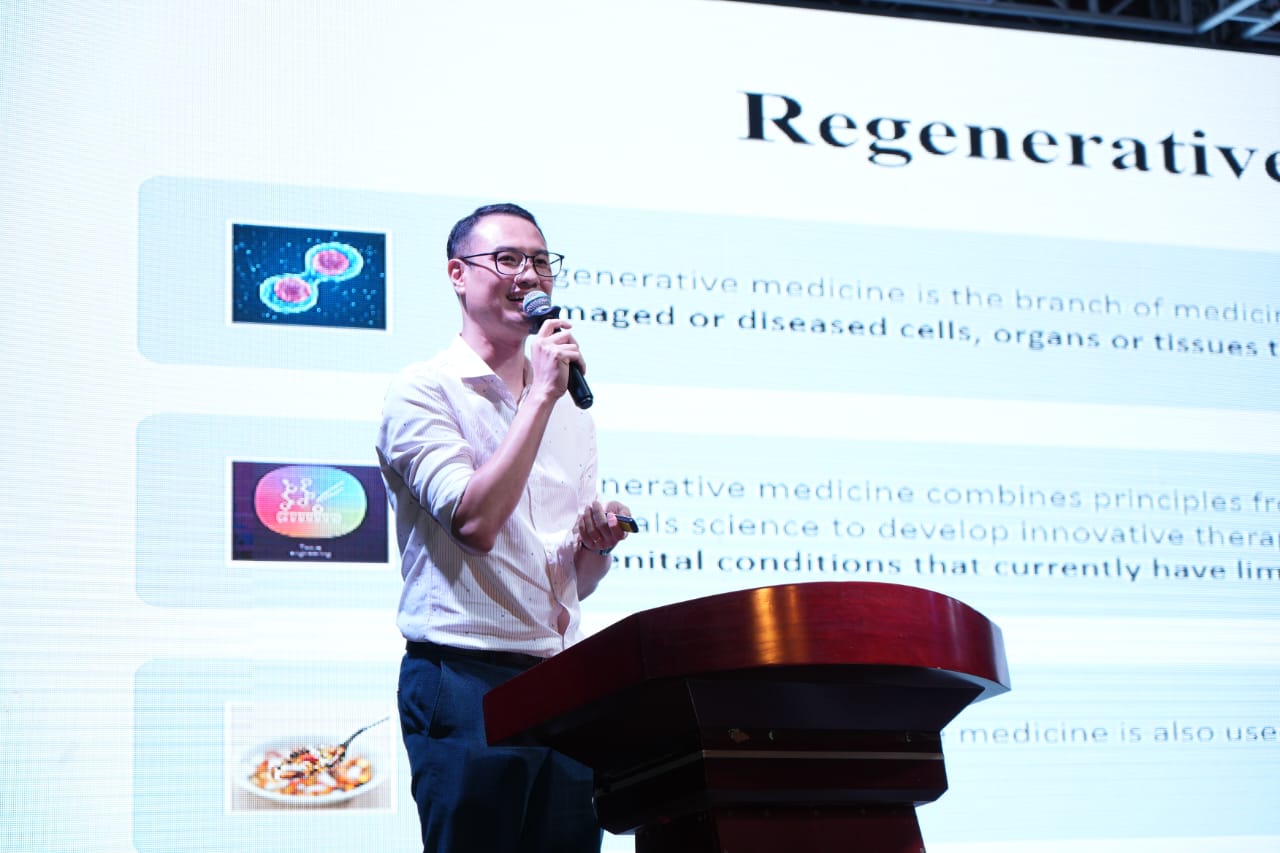
During the seminar, Associate Professor Dr. Daniel Law provided an overview of regenerative medicine as a rapidly expanding field encompassing stem cell therapy, tissue engineering and many more. He explained that regenerative medicine focuses on restoring damaged tissues and organs by stimulating the body’s natural repair mechanisms.
“Regenerative medicine offers promising potential to restore normal biological function and may help prevent disease by modifying or delaying disease progression,” he said during his presentation.
He also shared his expertise in extracellular vesicles (EVs), widely known as exosomes, highlighting the evolution of his research in this field. According to him, EVs demonstrate strong regenerative potential, and an increasing number of EV-based therapies are currently being explored and tested in clinical settings.
The seminar also marked the introduction of a new ocular health product line by Biolive Malaysia, a company widely recognized for its flagship anti-aging product RiboN. During the event, Biolive unveiled its latest innovation, i-RE, designed to support eye health and potentially slow the progression of degenerative eye conditions. The product also incorporates advancements in exosome-related technology to enhance its regenerative support.
According to the organizers, i-RE is formulated to support retinal health, protect ocular cells from oxidative stress, and enhance cellular repair mechanisms in the eye. Such support may play a role in delaying the progression of vision-threatening diseases such as Glaucoma and Age-related macular degeneration (AMD), which remain among the leading causes of vision loss globally.
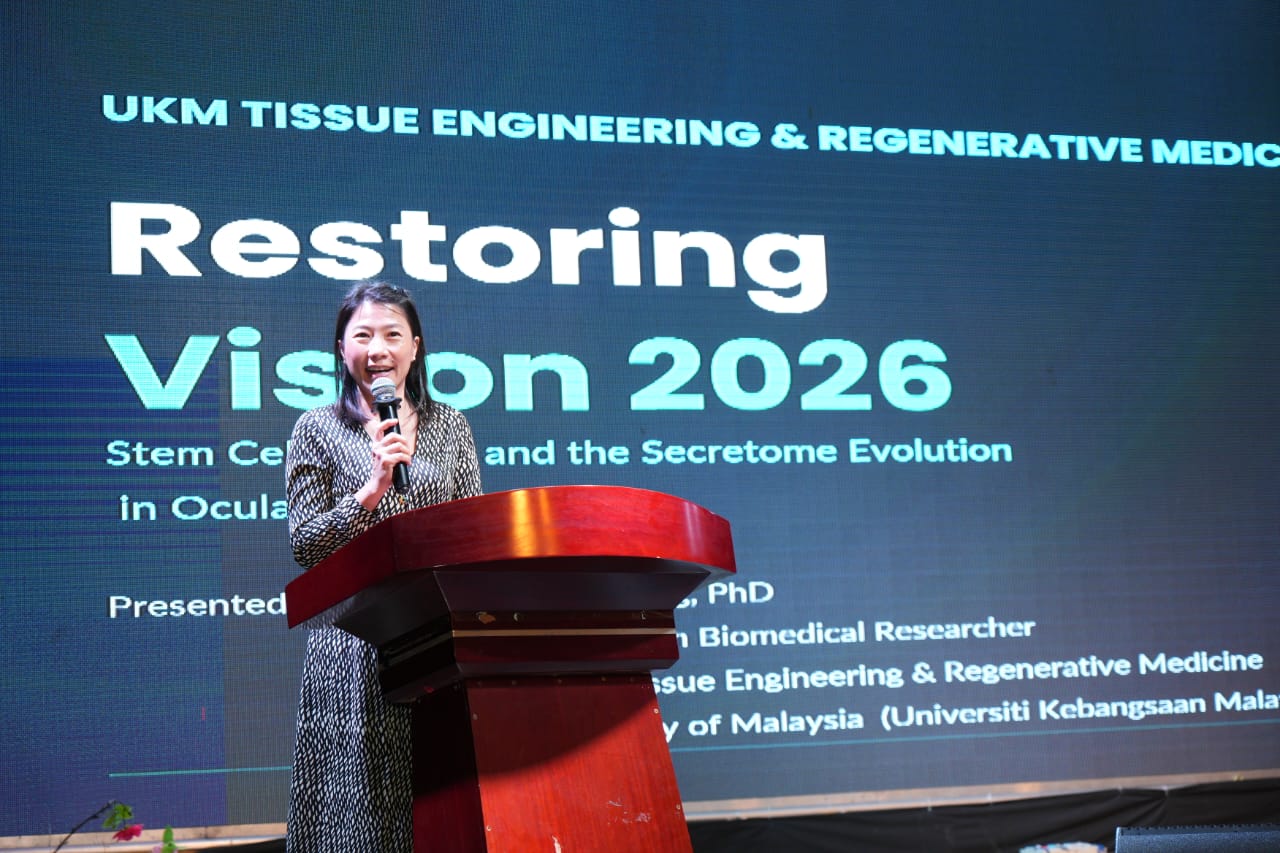
In her presentation titled “Stem Cells, iPSCs and the Secretome Evolution in Ocular Regeneration,” Associate Professor Dr. Angela Ng shared insights from her research on stem cell applications in eye regeneration. She highlighted the important role of limbal stem cells in maintaining corneal health and discussed emerging research into optic nerve regeneration.
Dr. Angela also presented findings from her research involving mesenchymal stem cells (MSCs), which demonstrated promising safety profiles in regenerative applications. Her work contributes to ongoing innovation within Universiti Kebangsaan Malaysia and reflects the growing momentum of regenerative medicine research in the region.
Sharing insights from Taiwan, ophthalmologist Dr. Yang You Chia highlighted that the presence of plant-derived exosome-like vesicles in i-RE contributes to the uniqueness of the product formulation. According to him, these bioactive components may enhance cellular communication and improve the efficiency of ocular support.
The seminar concluded with remarks from Su Yung Tsun, who discussed the potential benefits of integrating RiboN and i-RE as part of a comprehensive approach to support eye health and vision restoration. He explained that RiboN may help stimulate the body’s own stem cell activity to support optic nerve health internally, while i-RE provides additional nutritional and regenerative support for ocular tissues. He also emphasized the importance of maintaining good eye care habits and adopting early prevention strategies to protect long-term vision health.
As research in regenerative medicine continues to advance, initiatives like this seminar highlight the potential for innovative therapies and health technologies that could transform disease management and improve the quality of life for patients worldwide.